Introducing Annie - Alpha Theory Without Walls
Annie, our AI agent, is now available to all Alpha Theory clients. The easiest way to show its power is to start with an example.
Annie, our AI agent, is now available to all Alpha Theory clients. The easiest way to show its power is to start with an example.
A longtime LP wants to understand if the fund's edge is skill or luck and if it is durable. The PM knows the returns well, but showing sizing and selection skill takes some digging.
The same kind of digging comes up at year-end, when P&L tells you whose names worked but not whose forecasts held up, and that difference affects how much conviction you put behind an analyst's next idea. It comes up again in earnings season, when a few positions have a bad week, and you want to know whether the thesis changed or the stock moved with the market. In each case, the data and the math are usually already in Alpha Theory. Getting an answer to your first question was doable. The problem was the follow-ups: the second, third, and fourth questions that the first answer raised could take weeks or months to run down, and by the time you had them, the market and your portfolio had moved on. Annie collapses that cycle into minutes, so you can follow a line of thinking as far as it goes, while it still matters. Annie also lets PMs see how their optimal model is performing, pinpoint which names are driving the biggest gaps, and adjust the model on the spot. That means the optimal portfolio comes into line with how they actually want to invest much faster, and the signals it gives them become more useful for real decisions.
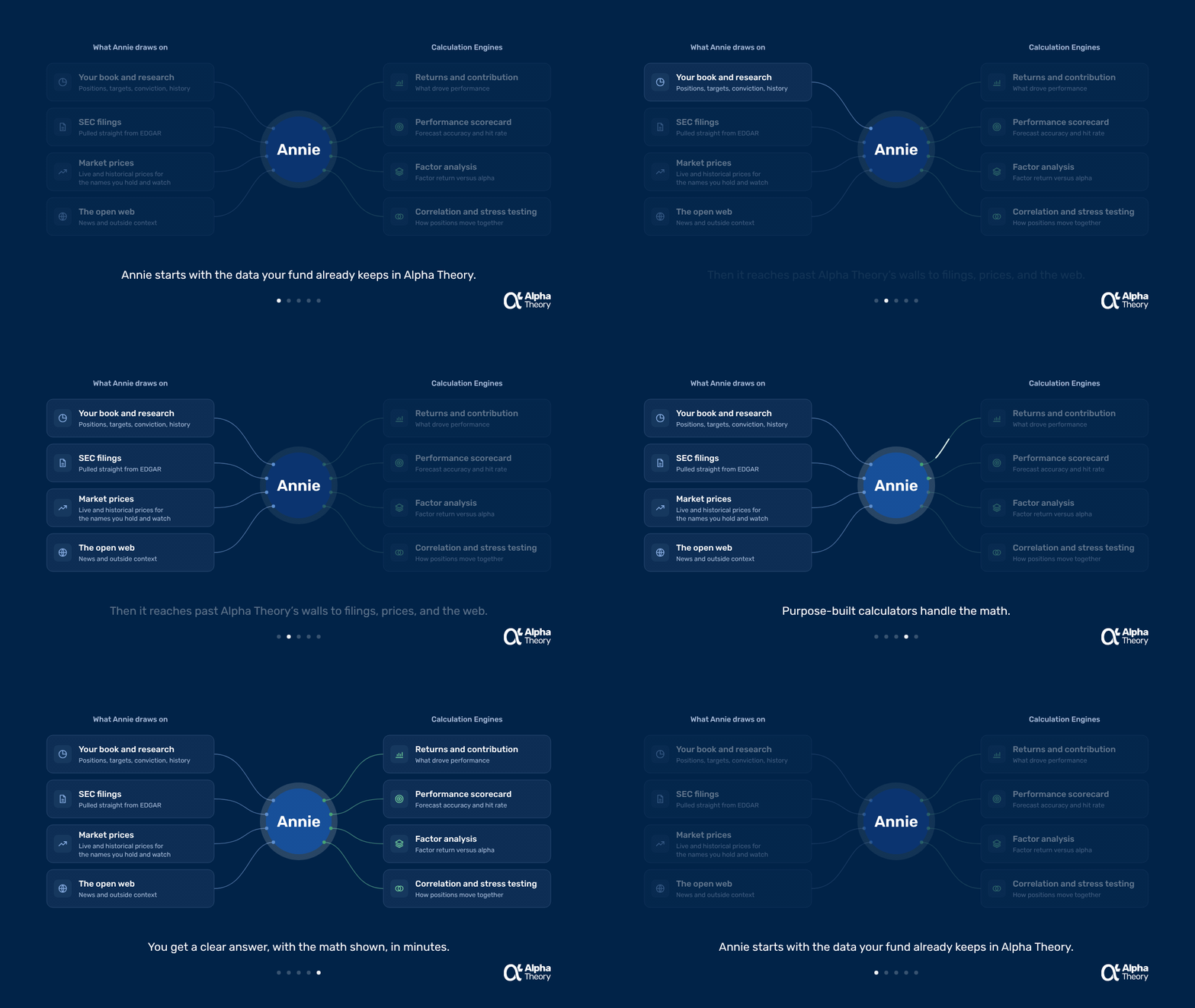
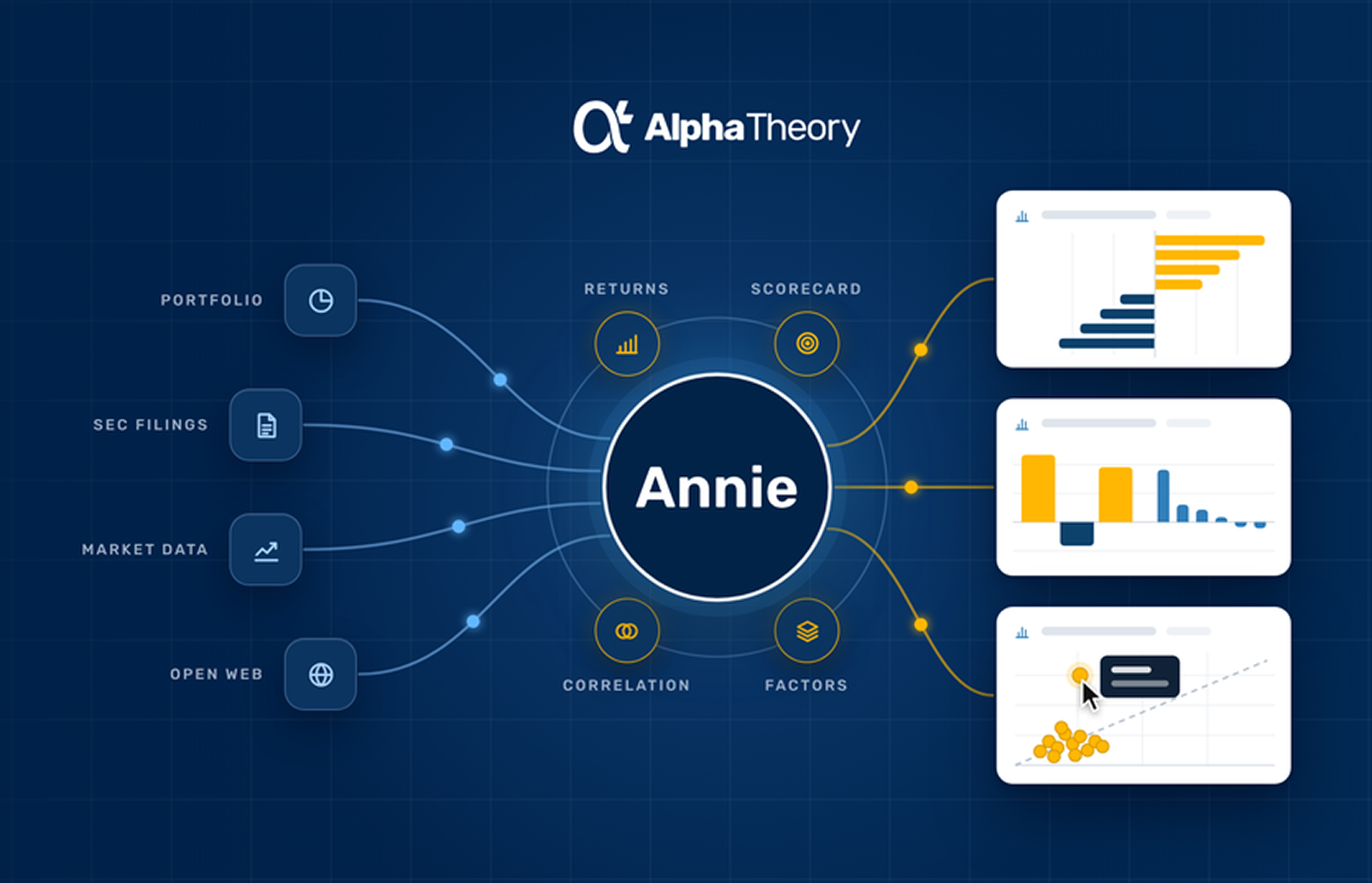
Alpha Theory was built around that math. The sizing engine turns return expectations, conviction, and fund rules into a recommended position size and updates it as those inputs change. Where it was limited was in reaching beyond its own data and screens, which is why we've started describing Annie internally as Alpha Theory without walls. Annie can now look at SEC filings, pricing for names outside the portfolio, and the web, alongside what the fund has entered. It can also run attribution, forecast accuracy, and sizing analysis in the middle of a conversation, work that used to arrive as a report someone on our team put together.
That makes the familiar parts of Alpha Theory easier to use too. A PM can ask why a position is sized above optimal and get the reasoning back in plain language, and an analyst can check their own forecasting record without waiting for the next review. It also handles questions we couldn't answer before. After an earnings report, a PM can ask how the print compared with the fund's estimates and with consensus, and what that means for expected return and position size. We've compared client estimates with FactSet consensus one name at a time for a while, and Annie can now rank the whole book by how far the fund's view sits from the street.
Over time, I think a lot of the value will come from the fund's own history. Each price target and checklist item an analyst enters is stored next to the position size it led to and the return that followed. J.P. Morgan Asset Management wrote about this kind of record in a paper this year, describing a firm's history of decisions, reasons, and outcomes as a large data asset that firms often underuse or never capture at all. One PM they quoted said AI helps him "make sure I don't make the same mistake twice," which is a good description of how we want clients to use Annie.
Annie is in the app today for clients whose firms have accepted our AI policy. To see how funds are already using it, join us for “Alpha Theory Without Walls,” a live conversation with clients who used Annie during the beta. We'll go through why we built it the way we did and what we required before any client data was involved, and a beta user will join us to talk about how their team uses it day to day.