.svg)


Built For Sizing. Rebuilt For What Comes Next.
For twenty years, Alpha Theory has worked from what clients put into it: the price targets, probabilities, and conviction scores behind each position. That was the right data for sizing, and it also set the boundary on what we could answer. We had no view of a company's filings, the street's estimates, or the news moving a stock. The deeper analysis on forecast accuracy, attribution, and analyst skill sat in reports someone had to know how to build, and a question that didn't fit an existing screen usually ended in an Excel export or a request to our client team.
Recently, Alpha Theory clients moved to a new version of the platform. The navigation was redesigned around collapsible panels and a simpler structure, and that's what people see when they log in. The feedback on the new look has been very positive.
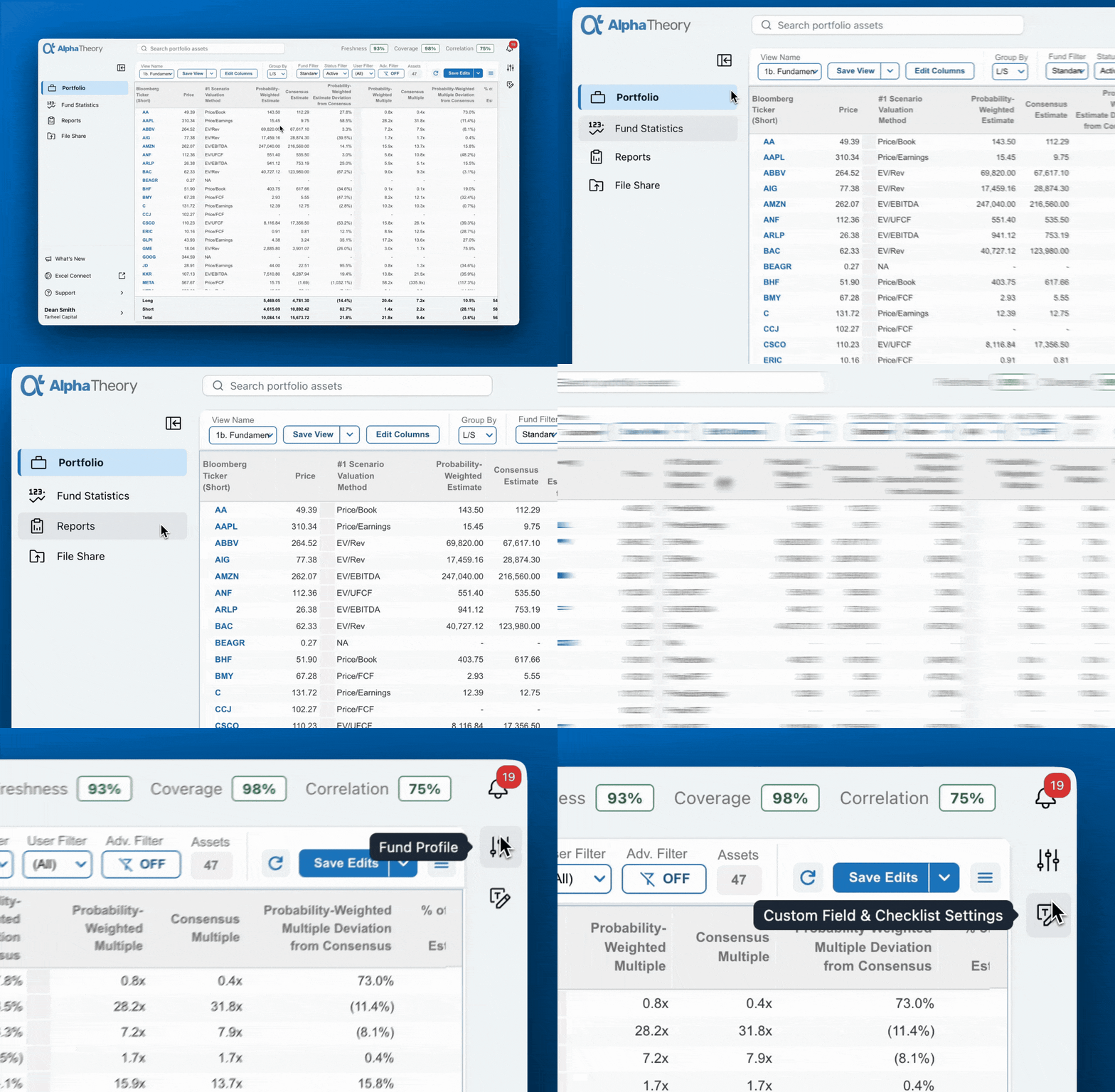
But the redesign was the visible part of a much larger rebuild. We moved the whole application onto a new foundation so we could build things on it that weren't possible before, and the first of those is Annie, our AI answer engine (currently in Beta for a select set of users). You ask a plain-language question about your portfolio, your process, or your research, and Annie answers inside Alpha Theory with text, tables, charts, or images.
For twenty years, Alpha Theory has worked from what clients put into it: the price targets, probabilities, and conviction scores behind each position. That was the right data for sizing, and it also set the boundary on what we could answer. We had no view of a company's filings, the street's estimates, or the news moving a stock. The deeper analysis on forecast accuracy, attribution, and analyst skill sat in reports someone had to know how to build, and a question that didn't fit an existing screen usually ended in an Excel export or a request to our client team.
Annie takes those limits away. Alongside your own data, it can read SEC filings, FactSet consensus, live and historical market prices, the web (and more), dramatically increasing the richness of the dataset it is working with. On top of that data sit a number of calculation engines, including actual vs. optimal returns, correlation & stress testing, Fama-French factor analysis, and Moneyball. Anyone on the desk can use it, from the PM to the analyst to the IR team. Alpha Theory has always been a way to size positions correctly. With Annie, it's also the fastest way to answer a question about your portfolio.
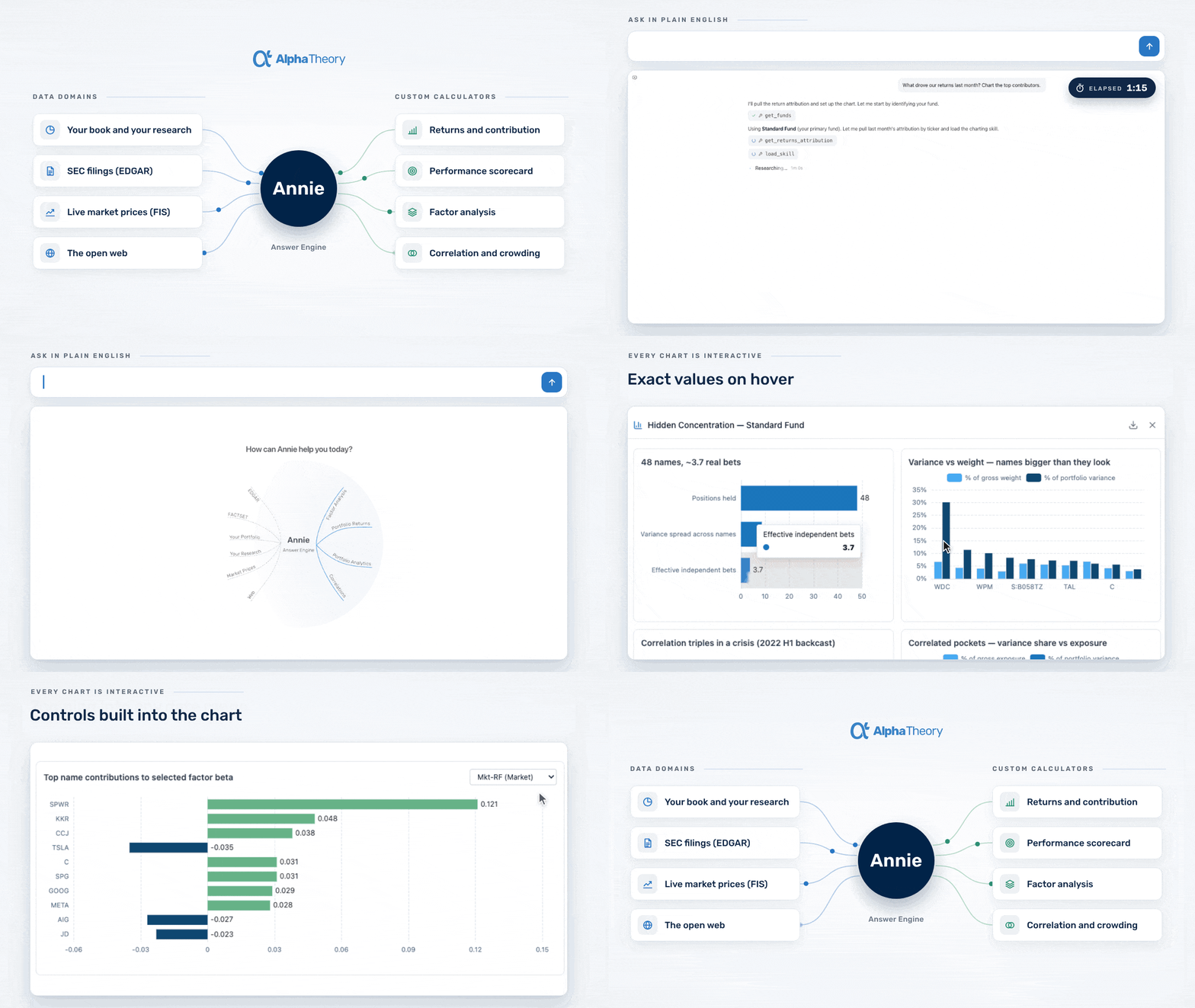
What makes Annie different is the combination. A general chatbot can summarize the news on a stock, but it has never seen your thesis. Annie reads that news against the price targets and probabilities your team has already recorded in Alpha Theory.
Take the weekly review of big moves. Every week a handful of positions move enough to matter, and the review often stops at the P&L, because reading the news on each mover and checking it against the thesis takes most of a morning. With Annie, it's one request. You get the P&L on each mover, the news behind it, and a read on whether that news supports or cuts against the price targets behind the position.
We've spent years on the Actual vs. Optimal comparison. In our 2025 Year in Review, Optimal beat Actual by 3.9% a year across 14 years and 200+ managers, and slugging under Optimal was 1.35x compared with 1.07x. Every fund's numbers are different, and Annie lets a PM dig into their own without spending hours or days and getting the entire team involved.
Annie can split a year's return into the analysts' picks, the PM's sizing, and market exposure the fund would have earned anyway. Asked whether an analyst's strong hit rate reflects skill or a few lucky calls, it tests the record for statistical significance. Alpha Theory also aggregates and anonymizes data across its client base into a single benchmark, which Annie can use to measure against a fund’s hit rate, win/loss ratio, forecast accuracy, optimal portfolio performance, and more.
The same Year in Review found that fresh price targets were associated with ROIC 1.6% higher on longs and 2.9% higher on shorts than targets 90 days or older. OPS is only as current as the research behind it. A PM can now ask which positions sit furthest below optimal, why the model wants more, and how much of the book rests on research nobody has touched in two months, and get the answer back as one dashboard. If a recommendation looks off, Annie will walk through every step from the probability-weighted return to the final size.
Outside research is new territory for Alpha Theory. A proper first read of a company's filings takes days. Annie works through five years of annual reports, the latest quarter, the footnotes, and insider transactions in minutes, cites every figure to the filing it came from, and does the same for names the fund doesn't own yet.
Every figure Annie returns carries its source and a confidence rating of high, medium, or low. We've asked PMs for twenty years to put probabilities on their price targets, so it seemed reasonable to ask the same of Annie. It reads your data, but it can't change anything in Alpha Theory or place a trade, and it doesn't give investment advice, so the decisions stay with the team.
We are writing up more than a dozen examples like these, each with the exact prompt behind it, and we'll share them over the coming weeks. In August, I wrote that thoughtful questions are the scarce input with AI. I'm curious to see what our clients ask Annie first.


.png)

